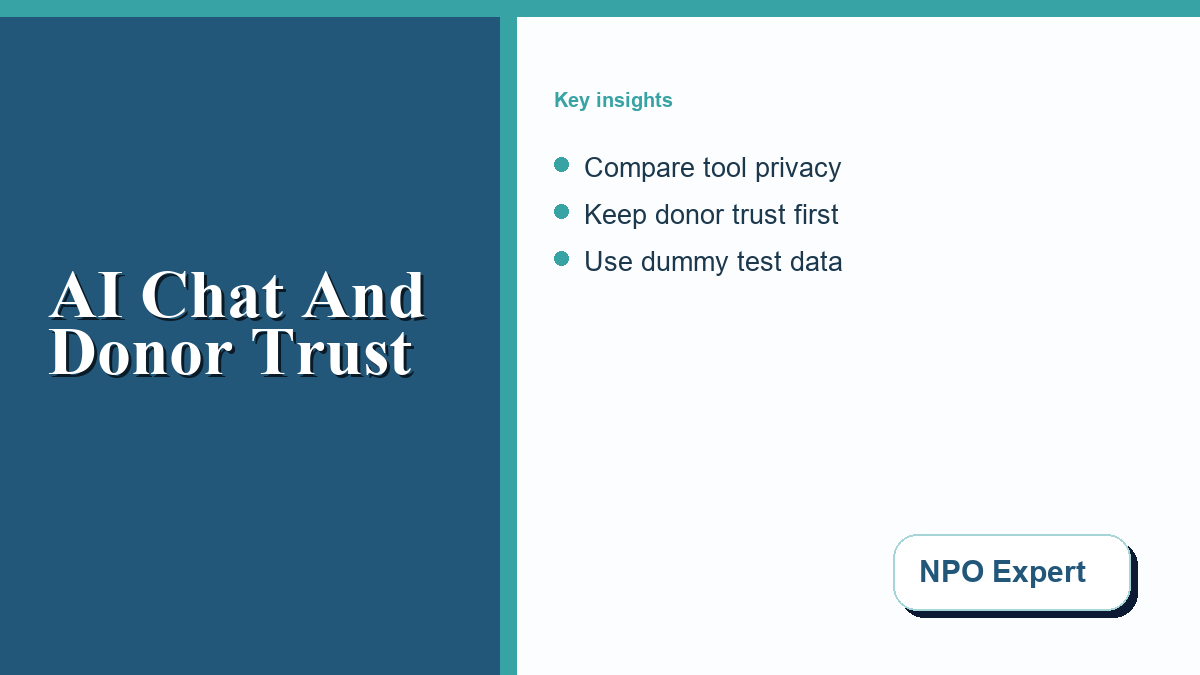
Small nonprofit teams can use AI to answer routine questions and draft staff-reviewed messages, but the safest rollout starts by measuring software for managing chat workflows against donor trust, privacy, and human review needs. That does not mean every donor interaction should be automated. For nonprofits, the value of any tool depends on whether it protects the trust that makes the mission possible.
A supporter does not give only because an email was well formatted. A volunteer does not stay involved only because a reminder was sent on time. People respond to clarity, care, consistency, and the feeling that the organization respects their information. If AI helps staff deliver that experience faster, it can be useful. If it makes the organization sound generic or careless with data, it becomes a trust problem.
This guide is for nonprofit leaders, fundraisers, volunteer coordinators, and communications staff who want the practical benefits of AI while keeping the human relationship at the center.
Start With Donor Trust, Not Tool Excitement
Nonprofits collect and handle sensitive information: donor names, giving histories, volunteer records, program stories, staff notes, event registrations, and sometimes details from people seeking help. That information carries a responsibility. The National Council of Nonprofits notes that data privacy is tied directly to public trust, and its guidance on data privacy for nonprofits specifically encourages organizations to think through whether and how information may be used with AI platforms.
That is the right starting point. Before a nonprofit compares tools, it should decide what information is allowed inside an AI system, who may use it, who reviews the output, and what kinds of communication remain human-only. A chatbot can answer “Where do I park for Saturday’s volunteer shift?” A staff member should handle a donor’s personal concern, a sensitive beneficiary story, or a complicated complaint.
AI can also support a broader communications plan. If your organization is already improving its marketing strategies for nonprofits, conversational tools should reinforce that message discipline instead of creating a separate voice. The tool should sound like your organization after a trained person reviews it, not like a generic assistant dropped into your website.
Use Conversational AI Where the Risk Is Low and Repetition Is High
The best early nonprofit use cases are repetitive, predictable, and easy to review. Volunteer onboarding is a good example. A conversational assistant can answer basic questions about shift times, dress codes, parking, location, waivers, background-check steps, and orientation links. A development team can use AI internally to outline a thank-you email series, summarize a meeting transcript, or turn event notes into a first draft for review.
Website FAQs are another practical starting point. Many nonprofits receive the same questions every week: where to donate items, how to request a receipt, how to register for an event, how to contact a program team, and how to volunteer. A carefully reviewed chatbot or AI-assisted FAQ workflow can reduce inbox pressure without pretending to replace staff judgment.
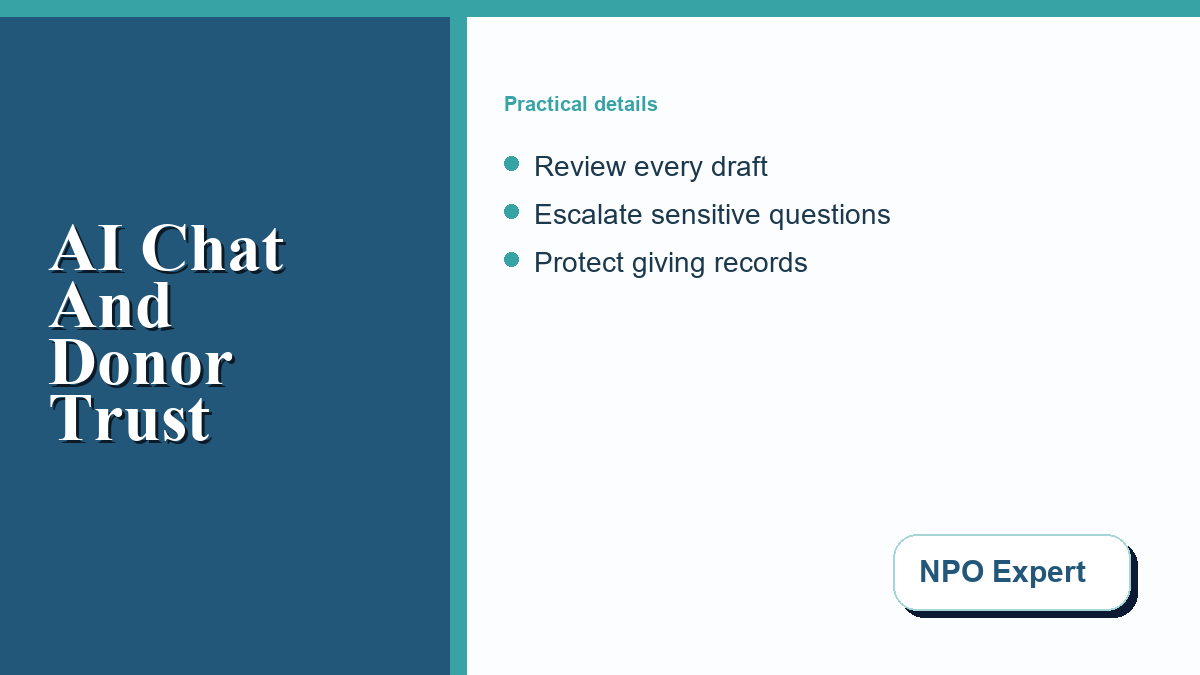
When comparing tools for these workflows, look beyond novelty. Ask whether the platform supports permission controls, data deletion, transcript review, escalation to a human, opt-out settings for model training, and clear vendor terms. A low-cost tool can still be the wrong choice if it encourages staff to paste donor details into a public prompt box.
A Decision Matrix for Nonprofit AI Workflows
Use a simple matrix before approving any AI workflow. The goal is to match the task to the right level of oversight. Low-risk, public information can usually move faster. Sensitive donor, client, financial, or program information needs tighter review or should stay outside public AI systems.
| Workflow | Operational value | Data risk | AI role | Human review |
|---|---|---|---|---|
| Volunteer onboarding FAQs | Answers repeated schedule, parking, and orientation questions. | Low to medium | Website or message assistant using approved answers. | Weekly review of transcripts and outdated links. |
| Donation receipt questions | Routes common receipt and tax-letter questions to the right page. | Medium | Routing helper, not a financial or legal adviser. | Staff approval for any nonstandard request. |
| Donor stewardship drafts | Creates first-pass thank-you notes and reminder outlines. | Medium to high | Internal drafting assistant with dummy or anonymized details. | Every message reviewed before sending. |
| Grant or impact reporting | Turns notes into outlines and checklists. | High | Internal structure helper only. | Program and finance leaders verify facts and numbers. |
| Beneficiary support questions | Provides basic navigation to public resources. | High | Limited triage with clear escalation. | Trained staff handle personal or urgent situations. |
Testing should happen with dummy data. If staff want to compare a mobile or low-cost ai chatbot app, they can use fictional volunteer names, sample donation amounts, and made-up event details. That lets the team evaluate speed, tone, workflow fit, and settings without exposing real supporter information.
Protect Donor Privacy and Fundraising Ethics
Fundraising ethics should shape how AI is used. The Association of Fundraising Professionals’ Code of Ethical Standards centers trust, transparency, and professional conduct. For AI workflows, that means donor data should not be copied into public tools without a clear policy, a valid operational reason, and appropriate safeguards.
Nonprofit teams should also avoid overreliance. AFP’s discussion of where AI fits in fundraising is a useful reminder that automation can support work without becoming the voice of the relationship. AI may help outline a donor update, but it cannot know the history behind a long-time supporter, the nuance of a recent board conversation, or the right tone after a community crisis.
A responsible AI policy does not need to be complicated. It should answer a few clear questions. What data is not allowed in AI tools? Which approved tools may staff use? Who reviews AI-assisted content? How are chatbot transcripts stored? When does a conversation move to a person? What will the organization tell donors and volunteers about automated support?
The National Council of Nonprofits has also covered responsible AI in the nonprofit sector, including the need for trust-centered frameworks. Boards do not have to become technologists, but they should understand how AI touches data, communications, fundraising, and risk.
Keep a Human in the Loop
The most useful safeguard is also the simplest: no AI-assisted donor, volunteer, or public-facing communication goes out without a person reviewing it. This human-in-the-loop process protects accuracy, tone, and context.
A reviewer should check facts first. Event dates, donation amounts, program names, grant details, and beneficiary stories need verification from the organization’s own records. Then the reviewer should adjust the voice. Nonprofit communication should sound like the organization, not like a template. Finally, the reviewer should consider the recipient. A first-time event volunteer needs a different tone than a major donor, a board member, or a family seeking program help.
This is especially important for appeals. AI can help brainstorm structure, subject lines, or a first outline, but a real fundraiser should shape the story and call to action. NPO Expert’s guide to donor appeals is a better place to ground that work because appeals depend on mission clarity, timing, audience understanding, and emotional honesty.
A Practical Rollout Plan
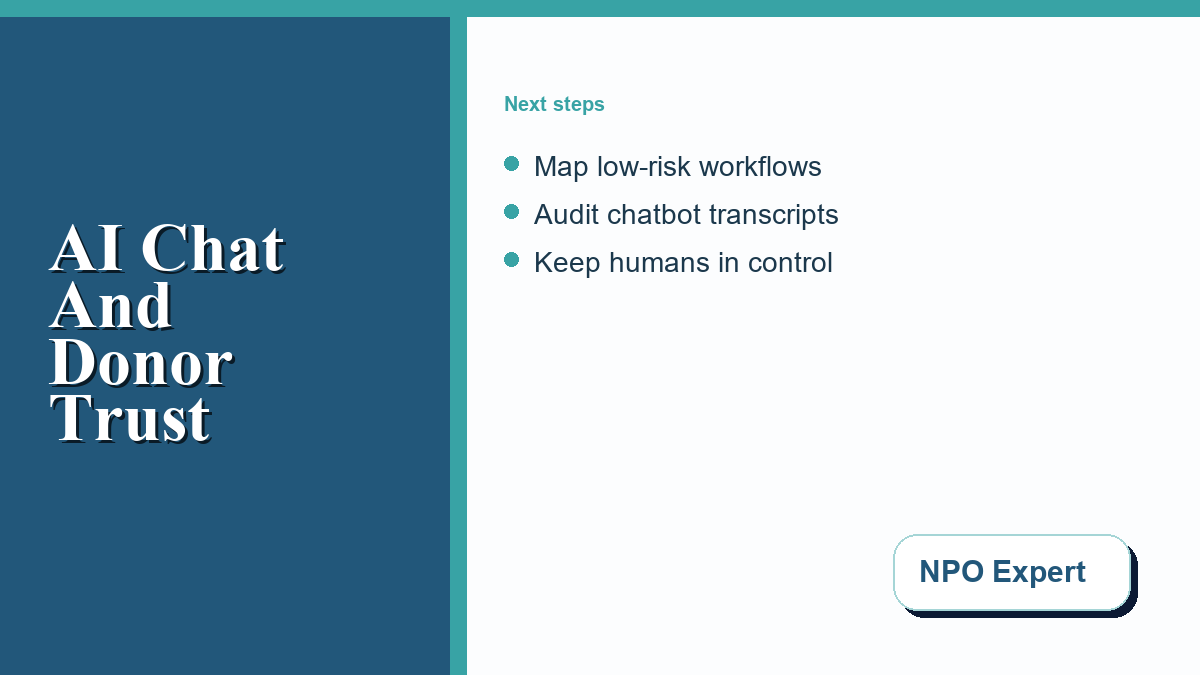
Start small. Pick one low-risk workflow, such as volunteer FAQs or internal email outlines. Write approved answers and escalation rules. Test with dummy data. Review transcripts weekly for the first month. Ask staff what saved time and what created confusion. Then decide whether to expand.
If the first workflow performs well, add another narrow use case rather than opening AI access everywhere. The healthiest adoption pattern is gradual: public FAQ assistance, internal drafting support, volunteer onboarding, then carefully governed donor stewardship support. Each step should have a clear owner, a review cycle, and a privacy rule that staff can actually follow.
Conversational AI works best for nonprofits when it gives staff more time for human work. Used carefully, it can reduce routine friction. Used carelessly, it can weaken the trust that donors and volunteers have placed in the organization. Keep the mission, the relationship, and the data policy ahead of the tool, and AI becomes a support system rather than a substitute for care.